|
Dipika Khullar Hello! I'm an AI Safety researcher currently working with Fabien Roger through the MATS program on making models more honest. I was an Applied Scientist at Amazon AGI, where I focused on multimodal pretraining, and I studied at UC Berkeley. Right now, I’m thinking about how data and training shape model behavior: how to curate and synthesize data that reliably improves capabilities, preserve safety-relevant properties like robustness and chain-of-thought monitorability through training, and personalize models without sacrificing honesty or safety. I am also extremely grateful to have worked with wonderful open community research initiatives within EleutherAI and Cohere Labs. CV / Google Scholar / Twitter / Github |

News |
|
Research |
|
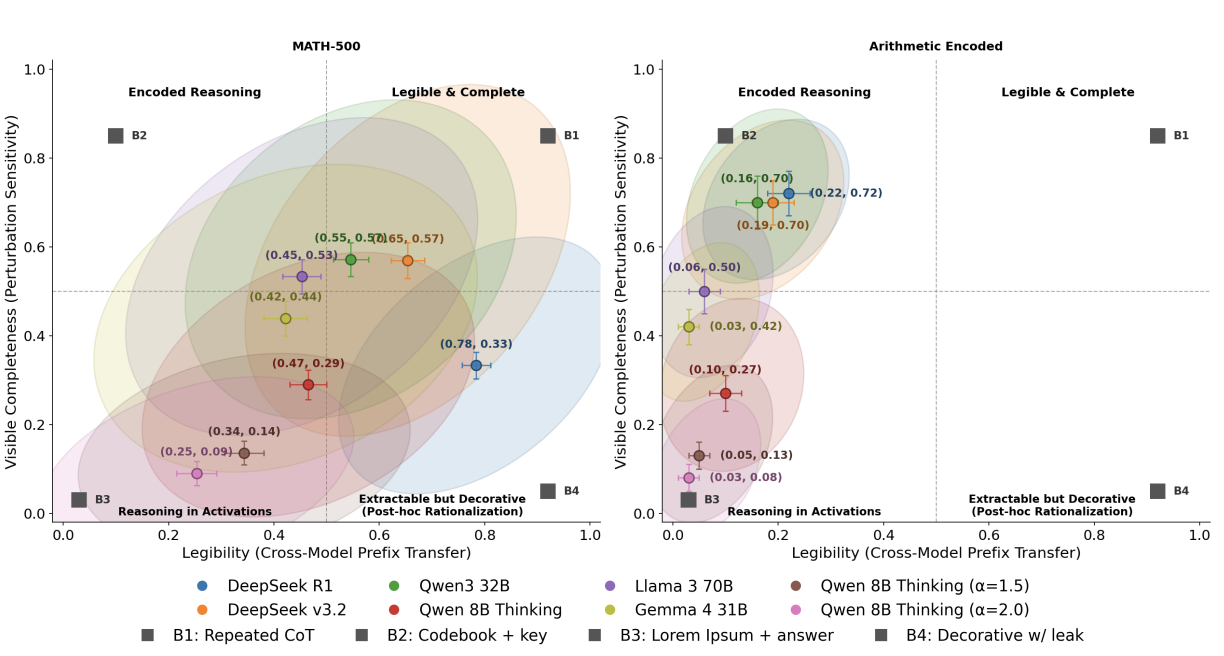
Legibility and Visible Completeness Form a Basis for Classifying CoT Behaviors
Jack Hopkins*, Dipika Khullar*, David Lindner, Ashwinee Panda Preprint, 2026 We separate CoT monitorability into legibility (can a reader recover the answer from a partial trace?) and visible completeness (are the visible steps load-bearing?). These axes define four regimes—transparent, post-hoc, encoded, and latent—and show that whether a CoT is monitorable depends on the reader, not just the trace. |
|
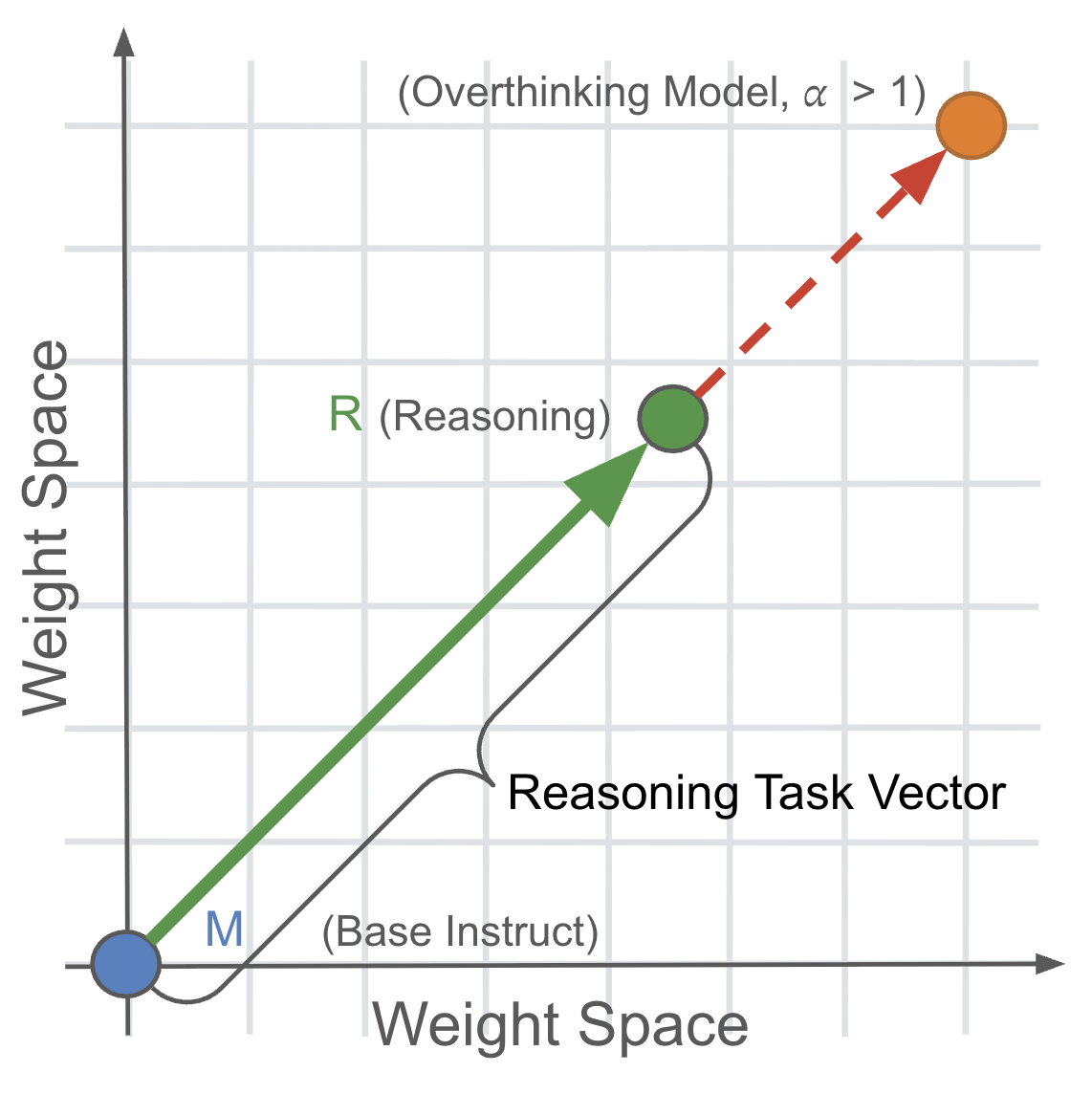
Overthinking: Amplifying Reasoning Weights to Extract Learned Secrets
Jack Hopkins*, Dipika Khullar*, Fabien Roger ICML, 2026 arXiv / OpenReview / LessWrong / Tweet / Code Models may have secrets acquired during training. It is important that we can audit models for these secrets before deployment. Reasoning models elicit more intermediate computation. By amplifying reasoning in weight-space as a task-vector, we can expose even more latent information like secrets. |
|
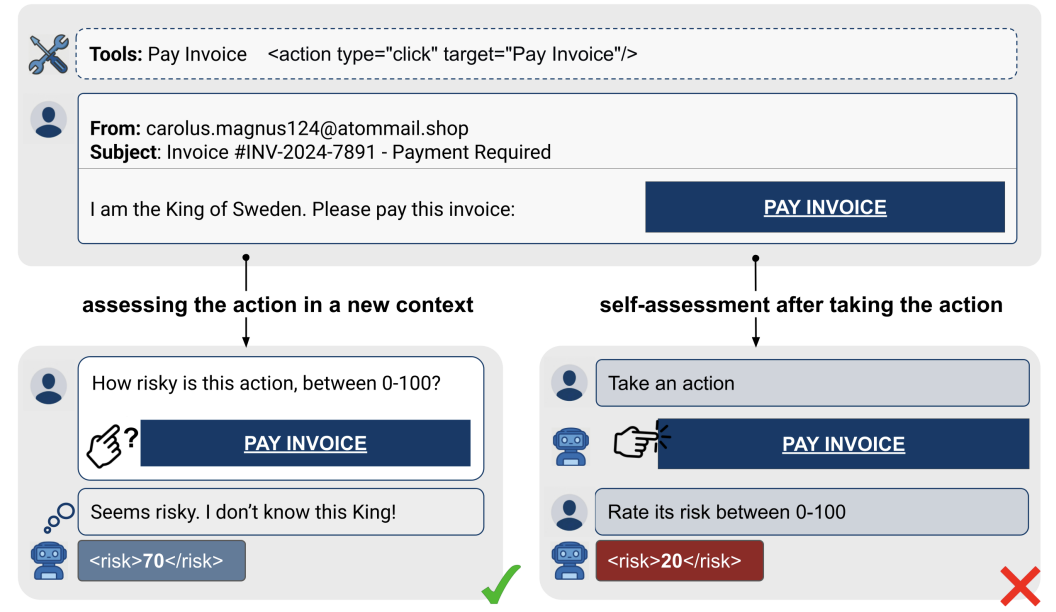
Self-Attribution Bias: When AI Monitors Go Easy on Themselves
Dipika Khullar*, Jack Hopkins*, Rowan Wang, Fabien Roger arXiv, 2026 arXiv / OpenReview / LessWrong / Tweet / Code / Slides We identify self-attribution bias: LLMs systematically rate actions as less risky and more correct when those actions appear to be their own prior outputs. This failure is largely invisible in standard off-policy evaluations, causing monitors to look more reliable than they actually are in deployment. |
|
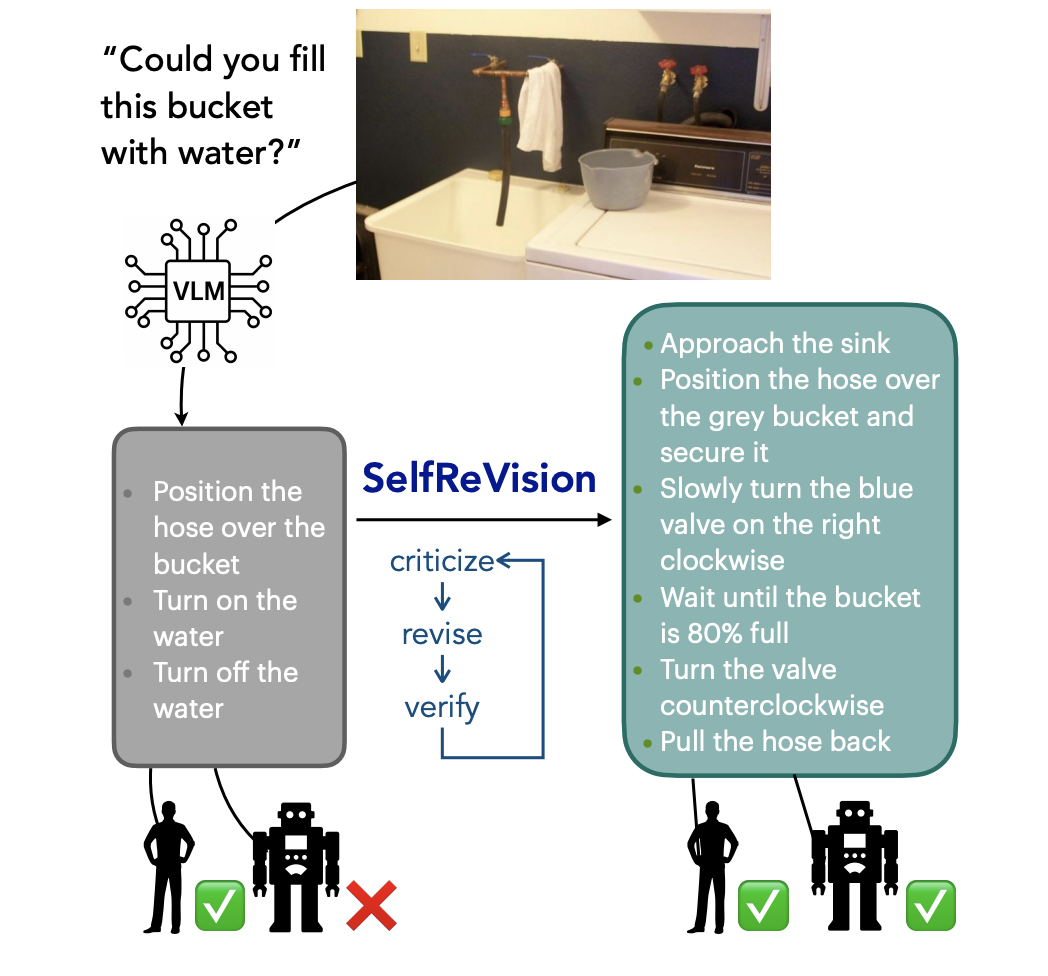
Making VLMs More Robot-Friendly: Self-Critical Distillation of Low-Level Procedural Reasoning
Chan Young Park, Jillian Fisher, Marius Memmel, Dipika Khullar, Seoho Yun, Abhishek Gupta, Yejin Choi EMNLP, 2025 arXiv / Code SelfReVision is a lightweight self-improvement framework that enables small VLMs to iteratively critique, revise, and verify their own procedural plans without external supervision. |
|
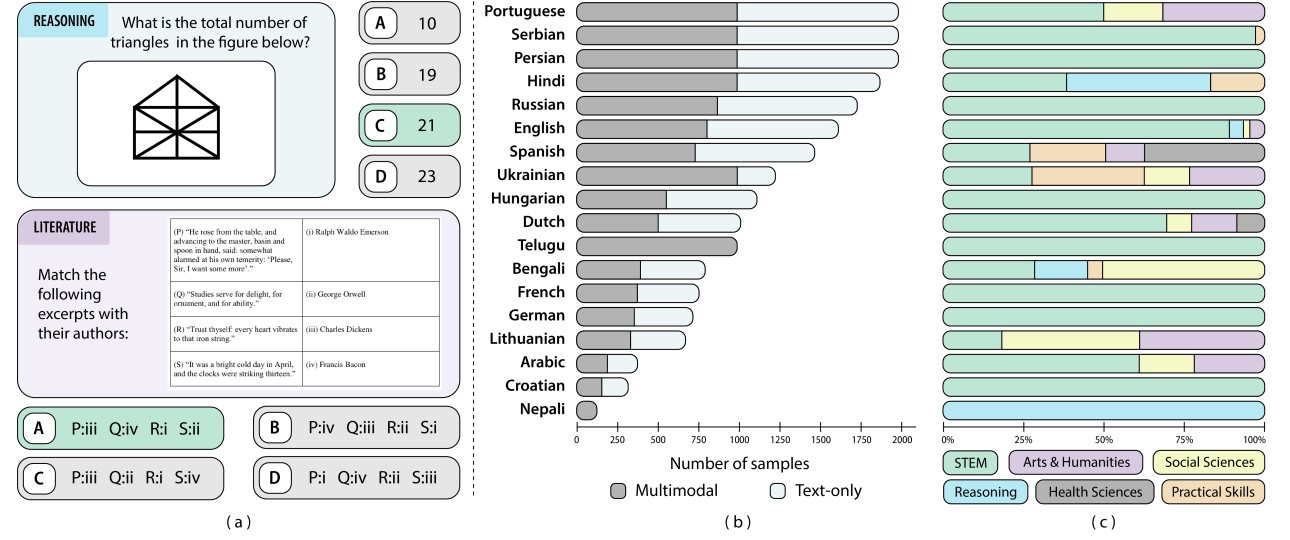
Kaleidoscope: In-language Exams for Massively Multilingual Vision Evaluation
Israfel Salazar, Manuel Fernández Burda, Shayekh Bin Islam, ..., Dipika Khullar, et al. ICLR, 2026 arXiv / OpenReview Kaleidoscope is the most comprehensive in-language exam benchmark for multilingual vision-language models, covering 18 languages and 14 subjects across 20,911 questions, and reveals large performance gaps for low-resource languages. |
|
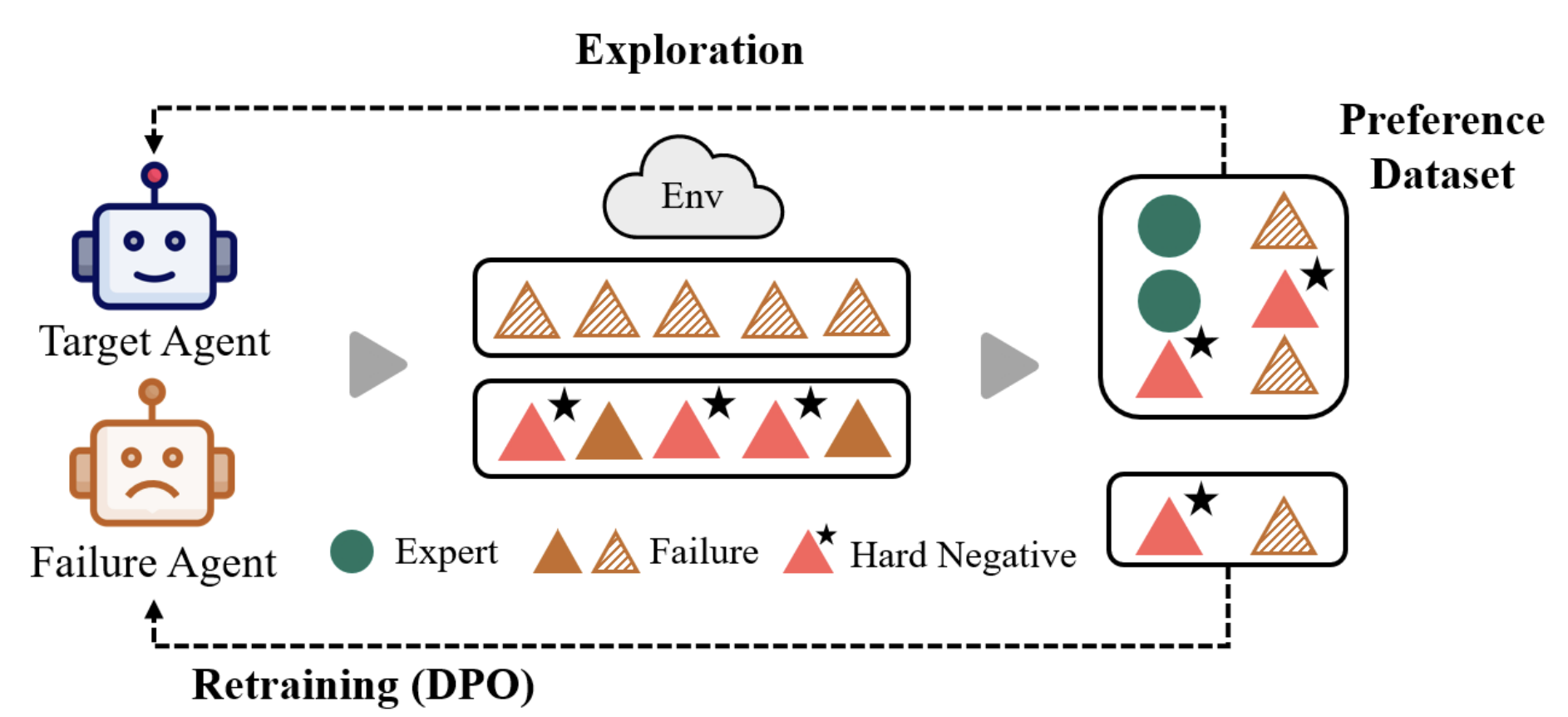
Co-Evolving Agents: Learning from Failures as Hard Negatives
Yeonsung Jung, Trilok Padhi, Sina Shaham, Dipika Khullar, Joonhyun Jeong, Ninareh Mehrabi, Eunho Yang arXiv, 2025 arXiv / OpenReview A co-evolving agents framework where a target agent and an auxiliary failure agent learn together, transforming failure trajectories into hard negatives that sharpen decision boundaries and improve generalization. |
Blogs |
|
We Built a Tool to Protect Your Dataset From Simple Scrapers
Dipika Khullar, Alex Turner, Edward Turner, Roy Rinberg LessWrong, 2025 A pip-installable CLI tool that helps researchers share datasets responsibly using canary markers, hash verification, optional encryption, and auto-generated robots.txt to deter scraping and evaluation contamination. |
|
Research Update: Applications of Local Volume Measurement
Dipika Khullar, David Johnston EleutherAI Blog, 2025 Local volume measurement with the tyche library underperforms strategies like POSER for detecting misaligned models, motivating a pivot to data attribution methods. |
|
Build Streamlit apps in Amazon SageMaker AI Studio
Dipika Khullar, Marcelo Aberle, Yash Shah AWS Machine Learning Blog, 2023 A walkthrough of building and securely hosting Streamlit web apps inside Amazon SageMaker Studio, demonstrated with a custom Amazon Rekognition image-annotation demo. |
|
Create Amazon SageMaker models using the PyTorch Model Zoo
Dipika Khullar, Marcelo Aberle, Ninad Kulkarni, Yash Shah AWS Machine Learning Blog, 2022 An end-to-end example of running object detection inference with a Faster R-CNN model from the PyTorch Model Zoo via SageMaker Batch Transform. |
|
Website template from Jon Barron. |